By Nichale Bool, Senior Criminal Defence Lawyer and Co-Founder, Elysian Law.
Domestic violence is not only violence between partners. In Queensland and NSW, violence by an adult child, grandchild, sibling or other relative can be domestic and family violence.
The person affected can apply for a protection order. The order can be written to protect them even if they still live under the same roof.
- One weekend in September 2026, three of four domestic violence-related deaths in NSW involved a family member, not a partner.
- The NSW Domestic Violence Death Review Team describes domestic and family violence as a complex, intergenerational problem.
- Queensland law covers family relationships, including parents, children, grandparents and siblings.
- Housing pressure may be keeping adult children and parents living together in unsafe homes.
- A protection order can control behaviour at home, or require a person to leave through an ouster condition.
In this article
- What happened over the weekend in NSW?
- How often do NSW police respond to family violence?
- What do death reviews and homicide data show?
- Is violence by an adult child domestic violence?
- Is the housing crisis keeping families in unsafe homes?
- When there is nowhere else to go
- Why Queensland should ask the same question
- Can you get a protection order and still live together?
- What a strong application includes
- Where to get help now
- Frequently asked questions
What Happened Over the Weekend in NSW?
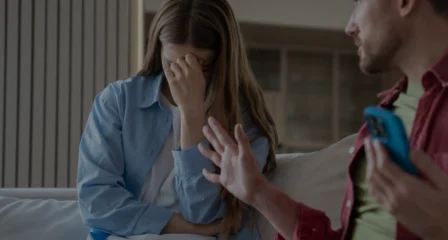
Domestic and family violence is often spoken about as if it only happens between partners. But what happens when the person causing harm is a son, a grandson, a parent or a sibling?
A tragic weekend in NSW brought that question into sharp focus. ABC News reported that three women died in separate domestic violence-related incidents on Saturday 19 September 2026.
A grandmother, aged 90
A 90-year-old woman died at a unit in Bondi Beach. Her 47-year-old grandson has been charged with domestic violence-related murder.
A mother, aged 70
A 70-year-old woman was found dead at a property west of Tenterfield. A 37-year-old man, who police believe is her son, has been charged with murder.
A mother and her three children
On Sunday, a five-year-old boy died and two younger siblings were seriously hurt. Police are treating it as a domestic violence incident, and the children's mother is a suspect.
The same weekend, a 23-year-old woman died in Wagga Wagga, and a man police say was her partner has been charged. That means three of the four deaths involved family members, not intimate partners.
These cases are very different and should not be treated as the same. Together, they raise a real question: are we paying enough attention to family violence outside intimate relationships?
How Often Do NSW Police Respond to Family Violence?
NSW Police say domestic and family violence is the most common type of incident frontline officers attend. That works out to roughly one callout every three minutes, day and night.
This does not mean a serious assault happens every three minutes. It means police deal with a huge number of family violence incidents, and not all of them involve partners.
After the weekend, NSW Police said none of the people charged were previously known to them. That is a warning sign in itself, because police cannot step in early when they do not know a risk exists.
What Do NSW Death Reviews and Homicide Data Show?
The NSW Domestic Violence Death Review Team examines deaths that occur in a domestic violence context. It was set up in 2010 under the Coroners Act 2009 (NSW).
The Team describes domestic and family violence as a complex, intergenerational problem. It says the response needs to reach across government, support services and the wider community.
In June 2026, the Team also launched a public dashboard showing where these deaths occur and who is most likely to commit them.
NSW Government homicide data, published by BOCSAR, show whether a murder was domestic violence-related. The data can also be broken down by the relationship between the victim and the alleged offender.
| Relationship group | Who it includes |
|---|---|
| Intimate partner | Current or former spouses, partners, boyfriends and girlfriends |
| Family | A child, parent, sibling or other relative |
| Other domestic relationship | Carers, housemates and similar relationships |
That distinction matters. It shows family violence beyond partners is being measured, even if it gets far less public attention.
Is Violence by an Adult Child or Grandchild Domestic Violence?
Yes. Both Queensland and NSW law treat violence between relatives as domestic and family violence.
- A parent assaulted by an adult child is experiencing family violence.
- A grandparent threatened by a grandchild is experiencing family violence.
- A sibling subjected to controlling or violent behaviour by another sibling can be experiencing family violence.
In Queensland, the Domestic and Family Violence Protection Act 2012 recognises three types of relevant relationships. These are intimate personal relationships, family relationships and informal care relationships.
A family relationship exists when one person is, or was, a relative of the other. Our guide to the Act explains how parents, step-parents, grandparents, siblings and cousins are covered.
An informal care relationship can also apply where an older person depends on a family member for daily help. In NSW, the equivalent order is called an Apprehended Domestic Violence Order (ADVO).
Why the focus stays on partners
There are good reasons public discussion centres on intimate partner violence. It is a major part of domestic violence, and the risk to women from current or former partners is well documented.
But a narrow focus can make other family violence harder to see. The recent NSW cases show why a wider lens matters.
Is the Housing Crisis Keeping Families in Unsafe Homes?
Australia's housing affordability crisis is changing how families live. More adult children are staying in, or moving back to, the family home because they cannot afford to live on their own.
For most families, that works out fine. But when a relationship is already unsafe, living together for longer can mean longer exposure to conflict and harm.
Whether housing pressure is increasing family violence by adult children is a question that deserves proper research. It should not be assumed, but it should not be ignored either.
What Happens When There Is Nowhere Else to Go?
Housing and family violence can connect in two ways. A person experiencing violence may be unable to leave because they cannot afford another home.
At the same time, an adult child who cannot find housing may stay in the parental home despite serious conflict.
Why this is so hard for older parents
- The parent may own or rent the home.
- The adult child may depend on them for money or a place to live.
- The relationship may carry years of history, care and emotional complexity.
- Many parents feel they must keep housing their child, no matter what.
These pressures can make it very hard to set boundaries, ask for help or ask an adult child to leave. Where a parent cannot act alone, someone else may be able to apply for a DVO on their behalf.
Why Queensland Should Be Asking the Same Question
This is not only a NSW issue. Queensland faces the same housing pressures, and the same risk that housing insecurity and family violence will overlap.
Queensland law already covers violence across family relationships. The challenge is making sure housing policy, police, support services and the wider community see that reality too.
Queensland's protection order laws also continue to change. You can read about recent amendments to the Act in our earlier article.
Can You Get a Protection Order and Still Live Together?
No, a person does not always have to leave the home to be protected. A protection order can include conditions that control contact and behaviour while both people keep living at the same address.
The right conditions depend on the facts, the level of risk and what the court thinks is needed to keep the person safe.
| Condition | What it does | When it may suit |
|---|---|---|
| Standard conditions | The respondent must be of good behaviour and must not commit domestic violence. | Every Queensland DVO, including where people still live together. |
| Contact and behaviour conditions | Limit how and when the respondent contacts or approaches the protected person. | Households where some contact is unavoidable but specific behaviour must stop. |
| Ouster condition | Requires the respondent to leave, and stay away from, a shared home. | Where living together is not safe. |
| Return condition | Lets the respondent return with police to collect personal belongings. | Often paired with an ouster condition. |
When deciding on an ouster condition, courts consider the accommodation needs of the people involved, including any children. Police can also include an ouster condition in a police protection notice in urgent situations.
Our protection for family members page explains the kinds of conditions available when the respondent is a relative.
What Should a Protection Order Application Include?
At Elysian Law, we recommend getting advice from a lawyer experienced in domestic and family violence law before applying, wherever possible. A carefully prepared application should clearly set out:
- The history of the violence.
- The specific incidents, with dates where possible.
- The circumstances that create the risk.
- The relationship between the parties.
- The protective conditions being sought.
Where people must keep living under the same roof, drafting the grounds and conditions carefully matters even more. Good drafting helps the order give real protection that fits how the household actually works.
Read more about how to apply for a protection order or how our team prepares applications for people seeking protection. If a family member has named you as a respondent, see our guide to contesting a DVO.
Where to Get Help Now
- 1800RESPECT: 1800 737 732, 24 hours, national.
- DVConnect Womensline (Qld): 1800 811 811, 24 hours.
- DVConnect Mensline (Qld): 1800 600 636.
- Elder Abuse Helpline (Qld): 1300 651 192.
- Ageing and Disability Abuse Helpline (NSW): 1800 628 221.
Frequently Asked Questions
Yes. Under Queensland law, a parent and adult child are in a family relationship, so a parent can apply for a domestic violence order against an adult child.
Our page on protection for family members explains how this works.
Yes. Grandparents and grandchildren are relatives, so violence, threats or controlling behaviour between them can be domestic and family violence.
Financial and emotional abuse can also count, not just physical harm.
Yes. A court can make an order with conditions that control behaviour and contact while both people stay at the same home.
The conditions depend on the level of risk and the facts of the case.
An ouster condition requires the respondent to leave a shared home and stay away from it.
Courts consider the accommodation needs of everyone involved, including children, before imposing one.
Yes. In Queensland, an authorised person can apply on behalf of someone who cannot act for themselves, such as an elderly parent.
Read our guide to applying for a DVO on behalf of someone else.
A DVO is a domestic violence order made in Queensland. An ADVO is an Apprehended Domestic Violence Order made in NSW.
Both can protect people from violence by family members, not just partners.

About the author
Nichale Bool
Senior Criminal Defence Lawyer & Co-Founder, Elysian Law
Nichale is a Senior Criminal Defence Lawyer and co-founder of Elysian Law, with over 15 years of experience across the Office of the Director of Public Prosecutions, the Queensland Police Service, and reputable criminal defence firms. She specialises in domestic and family violence matters, running and defending applications across Queensland.
Nichale believes in fair outcomes - empowering clients through the court process, ensuring they understand their rights, and offering fixed fee payments to give clients certainty.
Courts & Jurisdictions
Appears across all Queensland courts including Magistrates Court, District Court, and Supreme Court of Queensland, assisting respondents, aggrieved parties, and children in domestic and family violence matters.
Professional Memberships
More From Elysian Law
Protection of Family Members
How DVOs protect parents, relatives and new partners.
Read moreApplying on Behalf of Someone Else
Protecting an elderly parent or vulnerable relative.
Read moreHow to Obtain a Protection Order
The Queensland process from application to hearing.
Read moreThe Domestic and Family Violence Protection Act 2012
Relevant relationships explained.
Read moreTalk to Elysian Law
If you are facing violence from a family member, or need to understand your options, our team can help. We have offices in Brisbane and Noosa and appear in courts across Southeast and Regional Queensland.
This article is general information only and is not legal advice. Laws differ between Queensland and NSW, so please get advice about your own situation.