What Is A DVO, And How Does It Relate To Divorce?
It is important to know that divorce proceedings are separate to property settlement and parenting orders. A divorce order is the judicial determination of the formal ending of a marriage.
In Australia, a person in a marriage can apply to the Court for a divorce if they are:
- An Australian Citizen;
- Live in Australia and consider it their permanent home (and has evidence to prove this);
- Have ordinarily lived in Australia for at least 12 months before applying;
- Be separated for at least 12 months, even if living under the same roof; and
- If you have been married less than two years, you will have to seek permission and provide further evidence to the Court before you can apply for a divorce.
In some cases, where there has been domestic violence present in the marriage, the Court can consider the circumstances of the domestic violence as an exception to the above eligibility requirements.
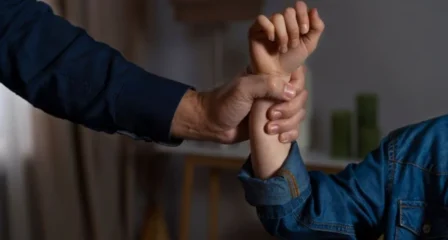
A Domestic Violence Protection Order (‘DVO’) is an Order made by a Court to protect a person from experiencing domestic violence. DVOs are an nationally recognised Order, however they are issued by a Magistrates Court or Local Court within the State or Territory of Australia.
Some DVOs/Protection Orders will have conditions that the Respondent is not to contact, follow or go to a certain place where the Aggrieved is.
Protection Orders can have named people or children on the orders if they have witnessed or experienced domestic violence as well.
If there has been domestic violence in the marriage, it becomes important in relation to divorce proceedings, as the Court will need to know the circumstances, make orders for service, and the hearing of the divorce order.
Can I Get a Divorce If There’s a Domestic Violence Order (DVO) in Place?
Yes, you can file for a Divorce Order even when there is a DVO in place.
The Court will require a copy of the DVO and further evidence regarding the domestic violence. For example, if you are applying for divorce where you have been married for less than two years or separated for less than 12 months.
How Do I Start The Divorce Process In Australia?
Divorce proceedings are started in the Federal Circuit and Family Court of Australia (FCFCOA), proceedings can be commenced by filing an application for Divorce (this can be done online or at a FCFCOA Registry).
Divorce proceedings can be filed on a ‘joint’ basis where both parties wish for the divorce to occur or a ‘sole’ application, where one party is filing for the Order.
Either party can bring the application for divorce, and either party can request to defend the divorce or proceed on an ‘undefended’ basis.
Can I File For Divorce Without My Partner’s Consent?
Yes, a person can file for a ‘sole’ application for divorce and not require the other person’s consent.
The other person will have an opportunity to respond to the divorce proceedings and tell the court whether they agree to the divorce order or wish to defend it.
If the other person wishes to contest a divorce application, in some circumstances the court will require a contested hearing, to hear the party’s evidence.
How Will Divorce Papers Be Served?
Under the Family Law Act and Family Law Rules, divorce proceedings (sole applications) are required to be served on the other person either in person, by post or through a lawyer to ensure the other side is aware of the proceedings.
There are strict service requirements for Family Law documents and multiple documents are required to be served and returned to the Court.
If the other person’s whereabouts are unknown, the court may make substituted orders to allow service through email or other means.
Does A DVO Affect The Divorce Process Or Timeline?
In some cases, a DVO can affect the divorce process or timeline, depending on the complexity of the case and whether service of the documents has been successful.
If you are unsure where the other person resides, because there is DVO in place preventing contact, serving them may be difficult. This may delay the process, in order to have them served by alternative ways. It is important if you are the Respondent in a DVO preventing contact you seek legal advice regarding ways to serve the documents that won’t contravene an order.
Once the proceedings have been commenced, the Court may request a party to provide evidence in the form of an affidavit, or further information outlining the domestic violence circumstances.
What Happens At The Hearing?
At the divorce hearing, the judicial officer will review the application, the evidence and the domestic violence allegations, and can make determination whether a divorce is granted.
In some cases, the judicial officer may adjourn the proceedings for a party to provide the Court with further information, or evidence to assist the court proceedings in making a decision.
How Elysian Law Help
Due to the complexities of domestic violence in divorce proceedings, you should seek legal advice regarding the process and service requirements, or what evidence is required to be provided to the Court.
Initiating divorce proceedings where there is domestic violence present can be an overwhelming and challenging time. Elysian Law can assist clients in obtaining a divorce orders in the Federal Circuit and Family Court of Australia. We can guide you through the legislation requirements and advocate for a swift divorce order particularly where family violence has impacted the marriage.
Contact Elysian Law team for confidential free consultation and discuss our fixed fees and payment plans.
For more information on your rights and legal options regarding Domestic Violence Orders (DVOs) and divorce, explore our articles and dedicated legal services:
At Elysian Law, we understand the profound impact these issues can have on both your personal and professional life. Our team is committed to providing expert legal guidance and compassionate support tailored to your unique needs.
Domestic and family violence, can have devastating effects on individuals and families. If you are in immediate danger or facing a life-threatening situation, your safety is the top priority.
Call Triple Zero (000) and ask for Police if you need urgent assistance.
If you’re not ready to speak with the police, there are other confidential support options available:
DV Connect: Call 1800 811 811 for support and guidance.
1800 RESPECT: Available 24/7 at 1800 737 732 for expert advice and resources.
We encourage you to reach out to these services for the help and support you need, or to find additional resources. No one should face these challenges alone.

About the author
Laura Summerville
Legal Practice Director & Co-Founder, Elysian Law
Laura is the Legal Practice Director and co-founder of Elysian Law, with extensive experience across Queensland's courts and legal system. She has a particular focus on representing clients in all areas of domestic and family violence, including protection order applications for both aggrieved and respondent parties, criminal proceedings, and Family Law matters involving complex family violence issues.
Laura holds a Bachelor of Laws (Honours) and practises in both family law and criminal defence. She is admitted to practice in Queensland and is a registered member of the Queensland Law Society.